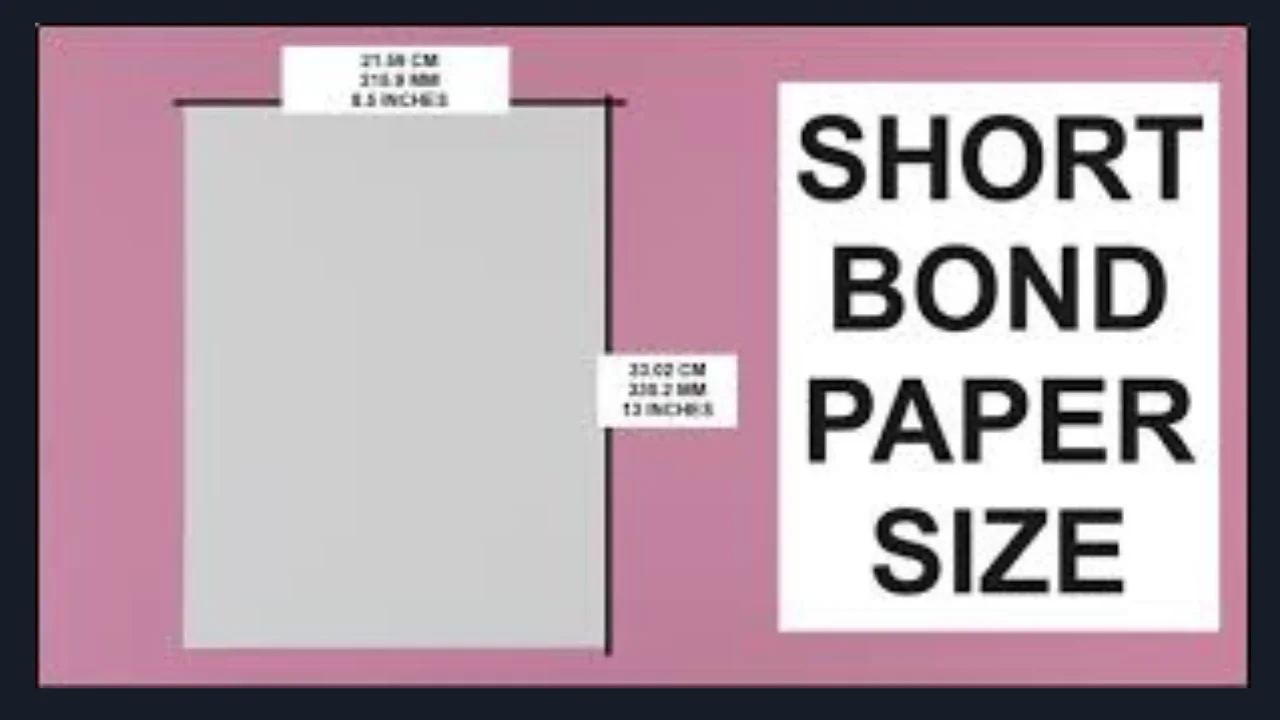
The short bond paper size is one of the most commonly used paper sizes worldwide. It appears in schools, offices, home printers, and digital documents. Many people use it every day without realizing its exact measurements or how it differs from other paper sizes. This guide explains everything about the short bond paper size in simple, clear language.
What Is Short Bond Paper Size?
The short bond paper size is a rectangular sheet measuring 8.5 x 11 inches. This size is also called Letter Size in the United States, Canada, and the Philippines. It is widely used for printing homework, reports, letters, resumes, documents, forms, and business files.
In metric units, the short bond paper measures 216 mm x 279 mm. Because of its popularity, most printers and copiers are preset to this measurement.
ALSO READ: Markets Review A Reliable Forex Broker
Why Is It Called “Bond Paper”?
The term bond paper comes from the paper originally used for printing government bonds and legal documents. It was known for its strength, durability, and high quality. Over time, “bond paper” became a general term for strong, bright white paper used for writing and printing.
Today, bond paper refers to standard office paper, usually available in long or short sizes.
Short vs. Long Bond Paper Size
Many people confuse short and long bond paper. Knowing the difference helps when printing assignments or preparing documents.
| Type of Paper | Measurements (Inches) | Measurements (Millimeters) | Common Use |
|---|---|---|---|
| Short Bond Paper | 8.5 x 11 inches | 216 x 279 mm | School and office documents |
| Long Bond Paper | 8.5 x 13 inches | 216 x 330 mm | Legal forms, contracts, and submissions |
The short bond paper size is ideal for everyday documents, while the long version is used for legal or formal paperwork needing extra writing space.
International Equivalent of Short Bond Paper
While the short bond paper is widely used in the U.S. and the Philippines, other countries follow the ISO 216 paper standard. The closest equivalent to the short bond paper is A4 size.
A4 vs. Short Bond Paper
| Type | Inches | Millimeters |
|---|---|---|
| Short Bond Paper | 8.5 x 11 | 216 x 279 |
| A4 Paper | 8.27 x 11.69 | 210 x 297 |
A4 is slightly narrower and longer. Many digital documents allow you to pick between the two sizes depending on your region or printing needs.
ALSO READ: Does DFA Accept NSO Birth Certificate 2025
Where Short Bond Paper Size Is Commonly Used
The short bond paper size appears in many settings. Here are the most common ones:
Schools and Universities
Students use bond paper for assignments, reports, essays, and project submissions. Many teachers specify “print on short bond paper” because it’s standard and easy to format.
Offices and Businesses
Companies use this size for invoices, memos, letters, forms, and internal reports. Most business printers are automatically set to this size.
Government and Public Institutions
Government offices use short bond paper for certificates, applications, and official records.
Home and Personal Use
People use it for printing photos, templates, schedules, planners, and personal letters.
Standard Formatting for Short Bond Paper
To format documents properly, it’s important to set correct margins and spacing. Here are the standard settings for school and office documents using the short bond paper size.
Recommended Margins
- Top: 1 inch
- Bottom: 1 inch
- Left: 1 inch
- Right: 1 inch
These are the default margins in Microsoft Word and Google Docs.
Font Size and Type
- Font Style: Arial, Times New Roman, or Calibri
- Font Size: 11 or 12
- Spacing: 1.15 or 1.5, depending on requirements
Orientation
- Portrait: Most documents
- Landscape: Charts, tables, worksheets
How to Set Short Bond Paper Size in Microsoft Word
Many users struggle with printing because their document is set to the wrong paper size. Follow the steps below:
- Open Microsoft Word.
- Click Layout.
- Select Size.
- Choose Letter (8.5″ x 11″).
- Adjust margins if needed.
- Save your document before printing.
This ensures your printer matches the short bond paper size for accurate printing.
How to Set Short Bond Paper Size in Google Docs
Google Docs also supports this paper size.
- Open your Google Docs file.
- Go to File.
- Click Page Setup.
- Under Paper Size, choose Letter.
- Click OK.
Your document is now ready for printing on short bond paper.
Paper Thickness Options for Short Bond Paper
Bond paper comes in different thickness levels measured in GSM (grams per square meter) or pounds (lb). These affect durability and texture.
Common Thickness Levels:
- 70 GSM: Thin and smooth; common for everyday printing.
- 80 GSM: Thicker and more premium quality.
- 90–100 GSM: Used for high-quality prints such as certificates.
- 20 lb: Standard office weight in the U.S.
- 24 lb: Slightly heavier; good for resumes or letters.
The short bond paper size is available in all these thickness levels depending on your needs.
Advantages of Using Short Bond Paper Size
This paper size remains popular because of several benefits:
1. Universal Compatibility
Printers, scanners, and copiers are built to support this size by default.
2. Professional Appearance
It provides a clean, neat layout ideal for schoolwork, resumes, reports, and business files.
3. Easy to Handle
It fits most folders, binders, envelopes, and portfolios.
4. Cost-Effective
Short bond paper is widely produced, making it affordable for bulk use.
5. Global Recognition
Even though some countries use A4, the short bond paper size is still accepted internationally, especially for digital documents.
Disadvantages of Short Bond Paper Size
While useful, this size has a few limitations:
1. Less Space for Writing
Compared to long bond paper or A4, there is less vertical space.
2. Not Standard Worldwide
Some regions require A4 format for official documents.
3. Limited for Large Charts or Diagrams
Graphic-heavy documents may need larger paper sizes.
Uses of Short Bond Paper in Printing
Here are the top uses of the short bond paper size in printing:
1. Academic Papers
Essays, project reports, research summaries, worksheets.
2. Business Documents
Contracts, financial summaries, company letters.
3. Creative and Personal Projects
Schedules, planners, organizational templates.
4. Marketing Materials
Flyers, brochures, product information sheets.
5. Forms and Certificates
Application forms and lightweight certificates.
Tips for Choosing the Best Short Bond Paper
Follow these tips to select the right type of bond paper:
- Choose 70–80 GSM for regular printing.
- Use 100 GSM or higher for certificates or professional documents.
- Pick bright white paper (90–100 brightness) for sharp printing.
- Avoid low-quality paper to prevent printer jams.
- Store paper in a dry place to avoid curling.
Why Short Bond Paper Size Remains Popular in Schools
Schools prefer this size because it is easy to format, fits standard binders, and allows consistent presentation of student work. Teachers also find it convenient for printing worksheets and handouts. The short bond paper size helps maintain uniformity in submissions.
Short Bond Paper in Digital Documents
Even in the digital world, paper size still matters. When you export files as PDF, the system preserves the layout. Many professional templates—including resumes, cover letters, and reports—use the short bond paper size because it looks clean and professional on all screens.
Conclusion
The short bond paper size is one of the most widely used paper formats in education, business, and government. Its dimensions of 8.5 x 11 inches make it practical for everyday printing, easy to handle, and compatible with most equipment. Whether you are a student, employee, or business owner, understanding this paper size ensures your documents look clean, organized, and professional.
By choosing the right thickness, setting proper margins, and using correct formatting, you can maximize the benefits of the short bond paper size in all your printing and writing tasks.